
Non Prime Lending Strategies: The Untapped Opportunity for Automotive Dealership Owners

“Don’t forget to speak to everyone and try everyone. To get them approved.” – Chris Wied, Wied Auto Finance Solutions
Why Non Prime Lending Strategies Matter More Than Ever for Dealer Principals
“There is financing available pretty much for everyone out there regardless of your credit.” – Chris Wied, Wied Auto Finance Solutions
- Broaden your inventory with vehicles tailored for non-prime customers
- Increase sales by unlocking finance options for subprime buyers
- Enhance dealership profitability through volume and protection product bundles
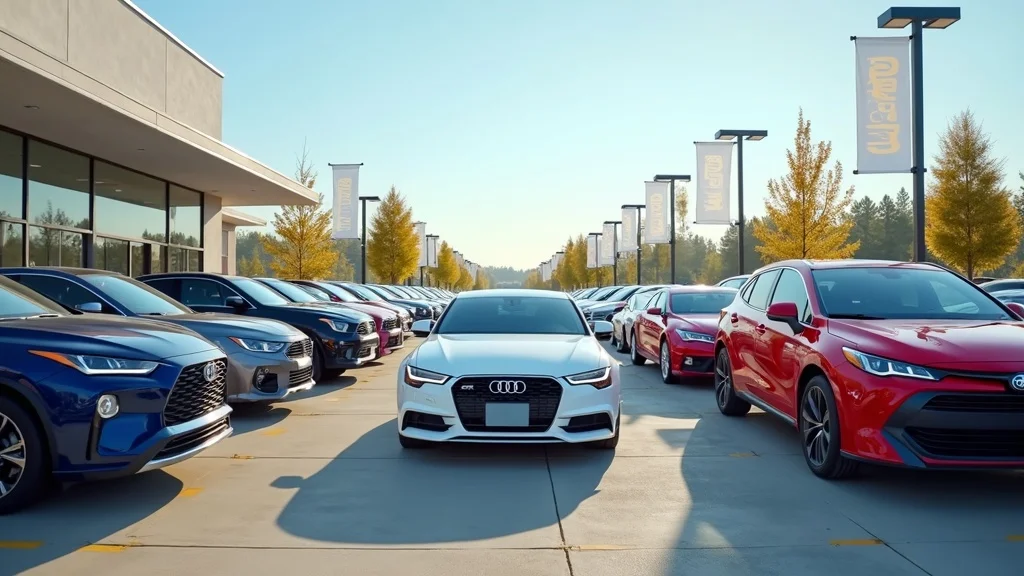
How Non Prime Lending Strategies Enable Inventory Expansion and Customer Reach
“It allows the dealer to be able to buy more inventory and have used car inventory specifically designed for that type of customer, typically buying between $18,000 to $25,000 cars.” – Chris Wied, Wied Auto Finance Solutions
Implementing Winning Finance Options: Practical Approaches from Wied Auto Finance Solutions
- Assess dealership’s current lending approach toward non-prime customers
- Train sales and finance teams on inclusive finance approval strategies
- Leverage specialized finance protection products tailored for non-prime buyers
- Partner with trusted finance program providers focused on subprime lending

Common Misconceptions About Non Prime Lending Strategies Debunked

- Myth: Non-prime lending is less profitable per deal – Reality: Profitability often grows with increased volume and protection products
- Myth: Financing options are limited for non-prime customers – Reality: Multiple finance programs exist catering to diverse credit profiles
Key Takeaways for Dealer Principals and Automotive Finance Teams
- Adopt inclusive lending approaches that try financing for all customers
- Expand used vehicle inventory aligned with non-prime customer demand
- Utilize comprehensive auto finance protection products to boost customer satisfaction and retention

Summary: Unlocking Non Prime Lending Strategies To Drive Dealership Growth in 2025
Take the Next Step to Broaden Your Dealership’s Financing Potential
By embracing the proven non prime lending strategies outlined by Chris Wied and Wied Auto Finance Solutions, dealer principals and finance managers can unlock new revenue streams, better serve all customers regardless of credit, and expand inventory tailored to the non-prime market segment.
The automotive lending landscape in 2025 offers dealership leaders a rare opportunity: to unlock a steadily expanding customer base using expertly crafted non prime lending strategies. As competition intensifies and traditional financing routes plateau, forward-thinking dealer principals have asked—where do the next margins and market expansion opportunities truly exist? According to Chris Wied, the driving force behind Wied Auto Finance Solutions, the answer lies in rethinking how dealerships approach subprime auto finance and inventory acquisition.
Wied’s deep expertise, honed from years of successfully enabling dealerships across multiple states, eliminates the guesswork. He emphasizes that the prevailing misconception—that non-prime deals deliver thinner profits—prevents many organizations from realizing the multifaceted growth this segment offers. Instead, embracing inclusive lending practices actually fuels broader inventory turnover and taps a community of buyers eager for second-chance financing. Chris Wied’s insights equip decision makers to not only increase unit sales but also bundle high-margin protection products that ultimately drive profitability and repeat business.
Non Prime Lending Strategies: The Untapped Opportunity for Automotive Dealership Owners
For many dealership owners, the term "non prime lending strategies" often comes with lingering doubts about complexity and risk. But as Chris Wied of Wied Auto Finance Solutions explains, those preconceptions are rooted in outdated thinking. The true untapped opportunity is hiding in plain sight: virtually every dealership has a pool of subprime-qualified customers walking through their doors who are overlooked because staff believe the financing options are too slim or the profit too small.
Wied sees this as a fundamental error. “Non-prime lending is not only about financing buyers with less-than-optimal credit,” he underscores, “it’s about how a dealership positions itself to serve everyone who comes looking for a vehicle, regardless of credit. ” This inclusivity means expanding inventory to feature high-demand vehicles in the $18K–$25K segment—right where subprime customers are most likely to purchase. The trick to unlocking sustained growth is pairing these inventory choices with finance programs and protection product bundles that match buyer needs and maximize per-sale revenue.
“Don’t forget to speak to everyone and try everyone. To get them approved.” – Chris Wied, Wied Auto Finance Solutions
Why Non Prime Lending Strategies Matter More Than Ever for Dealer Principals
The finance world rarely stands still. As economic shifts continue to affect credit markets, one enduring truth remains: there’s “financing available pretty much for everyone out there regardless of your credit,” says Chris Wied. This fundamental shift in the accessibility of auto loans means dealerships can no longer afford to just target prime buyers or neglect finance opportunities based on misconceptions about approval rates. The non-prime segment is not just larger than ever—it's also increasingly well-served by innovative finance programs that reward dealerships for being proactive rather than reactive.
According to Wied, tapping into this broader market doesn’t just mean closing more deals. It also means reshaping the dealership’s inventory profile to feature vehicles preferred by non-prime buyers—most notably, used models in the $18K–$25K range. By doing so, a dealership can “buy more inventory and have used car inventory specifically designed for that type of customer,” dramatically improving both stock turnover and customer satisfaction. This is a decisive shift: serving the non-prime market ceases to be a fallback option and becomes a primary growth channel.
“There is financing available pretty much for everyone out there regardless of your credit.” – Chris Wied, Wied Auto Finance Solutions
- Broaden your inventory with vehicles tailored for non-prime customers.
- Increase sales by unlocking finance options for subprime buyers.
- Enhance dealership profitability through volume and protection product bundles.
How Non Prime Lending Strategies Enable Inventory Expansion and Customer Reach
Implementing tailored non prime lending strategies goes beyond just meeting quotas—it turns dealerships into community resources for buyers often sidelined by mainstream lenders. “It allows the dealer to be able to buy more inventory and have used car inventory specifically designed for that type of customer,” Chris Wied shares, highlighting the direct link between financing inclusivity and inventory breadth.
By focusing on models that resonate with non-prime buyers and employing finance programs expressly designed for subprime and near-prime scenarios, dealer principals can both expand their reach and reliably move inventory that might otherwise sit idle. The real innovation comes from coupling these vehicle selections with expertly bundled protection plans—such as vehicle service contracts, GAP coverage, and warranty bundles—that boost both customer confidence and revenue per vehicle. Wied’s perspective is clear: this is about long-term customer relationships as much as it is about closing a single sale.
“It allows the dealer to be able to buy more inventory and have used car inventory specifically designed for that type of customer, typically buying between $18,000 to $25,000 cars.” – Chris Wied, Wied Auto Finance Solutions
Implementing Winning Finance Options: Practical Approaches from Wied Auto Finance Solutions
Turning theory into practice is where many dealerships falter—unless they can draw on expert guidance like that offered by Wied Auto Finance Solutions. According to Chris Wied, success lies in a systematic overhaul of dealership finance operations, starting with a frank assessment: Is the current lending strategy truly inclusive? Dealerships should then prioritize team training focused on universal approval strategies, equipping staff to confidently approach every lending scenario with solutions in hand.
Wied further advises leveraging a broad array of protection products uniquely suited to non-prime buyers. For instance, offering vehicle service contracts, limited warranties, and 5-in-1 bundles not only enhances deal value but also protects both customer and dealership over the long term. Partnerships are key—collaborating with finance program providers like Wied Auto Finance Solutions ensures access to continually updated subprime lending options and responsive, consultative support that can adapt swiftly to changing credit landscapes.
- Assess dealership’s current lending approach toward non-prime customers
- Train sales and finance teams on inclusive finance approval strategies
- Leverage specialized finance protection products tailored for non-prime buyers
- Partner with trusted finance program providers focused on subprime lending

Common Misconceptions About Non Prime Lending Strategies Debunked
Many still mistakenly believe that venturing into non-prime auto lending is a step down in dealership operations. Chris Wied addresses a chief myth head-on: that non-prime deals are less profitable per transaction. In fact, dealerships maximizing this segment often outperform peers by leveraging volume—moving more units at scale—and capitalizing on high-retention product bundles. Profitability is less about the margin per deal and more about consistent sales flow and protection plan adoption.
Another widespread error is assuming that financing options for non-prime buyers are few and far between. According to Wied, the opposite is now true: “Multiple finance programs exist catering to diverse credit profiles,” and leading providers are innovating constantly to keep pace with market needs. Dealerships able to recognize and act on these realities open new lanes for growth and customer loyalty that competitors locked in old lending paradigms will never see.

- Myth: Non-prime lending is less profitable per deal – Reality: Profitability often grows with increased volume and protection products
- Myth: Financing options are limited for non-prime customers – Reality: Multiple finance programs exist catering to diverse credit profiles
Key Takeaways for Dealer Principals and Automotive Finance Teams
Synthesizing Chris Wied’s core messages yields several actionable principles. First, never pre-judge buyers: institute an inclusive lending approach that seeks to approve every customer—because, as Wied repeats, “Don’t forget to speak to everyone and try everyone. ” Second, ensure inventory procurement aligns with non-prime demand: stock the vehicles these customers want. Third, anchor profits and customer loyalty with comprehensive protection products—service contracts and warranty bundles retain buyers and turn new customers into long-term brand advocates.
According to Wied, the dealerships he partners with report not only increased volume but also markedly higher satisfaction rates among both teams and buyers. By shifting mindset and operations to center non-prime lending, leaders put their organizations on track for sustainable, inclusive growth that survives market cycles.
- Adopt inclusive lending approaches that try financing for all customers
- Expand used vehicle inventory aligned with non-prime customer demand
- Utilize comprehensive auto finance protection products to boost customer satisfaction and retention

Summary: Unlocking Non Prime Lending Strategies To Drive Dealership Growth in 2025
Take the Next Step to Broaden Your Dealership’s Financing Potential
In 2026’s rapidly evolving automotive market, non prime lending strategies are not just a niche tool—they are the growth engine for dealer principals and finance leaders willing to adapt. As Chris Wied and Wied Auto Finance Solutions have shown, the future belongs to those who serve all credit profiles, design inventory around real-world demand, and embrace protection products that guarantee satisfaction for both dealership and customer. Don’t let myths and outdated processes hold your business back from its next phase of expansion.
Now is the time to assess your dealership’s finance inclusivity, invest in targeted inventory, and empower your teams with the right lending knowledge—following the strategies outlined by Chris Wied and his decades of proven expertise. The payoff: a more diverse buyer base, increased sales volumes, and customers whose loyalty will be earned for years to come.
Ready to broaden your options and improve your bottom line? Reach out to Wied Auto Finance Solutions for guidance, partnership, and tailored support, or visit w-afs. com or call 833-533-3600 to begin unlocking your dealership’s full financing potential in 2025.


Write A Comment